
 Louis Daguerre
Arles – Encounters with Photography
A personal journey through the exhibitions, discoveries and unexpected encounters of Arles
In 1970, photographer Lucien Clergue, writer Michel Tournier and historian Jean-Maurice Rouquette founded Les Rencontres d’Arles – a series of photographic encounters that gradually transformed this southern French town into one of the world’s most important centres for photography. What began as a gathering of a small circle of photographers grew into an international event attracting visitors from every continent. Each summer, photographers, curators and art lovers arrive to see work by established artists, discover new names and explore the different directions contemporary photography is taking. These encounters – with images, their makers and fellow visitors – are an essential part of the experience.
My first introduction to the festival was through its mobile app. A map showing all the exhibitions, along with a dot marking your location, makes navigating the town quick and easy – you can immediately see what is nearby and which way to go. You can also mark the exhibitions you have already visited to keep track of what you have seen and what is still ahead.
Exhibitions in Arles occupy all sorts of venues – from galleries and churches to entirely unexpected spaces. While looking for one of them, the map kept directing me towards a supermarket, and for a moment I wondered whether I was in the right place. I tried asking the cashier, but we could not understand each other, as she did not speak English. Fortunately, I ran into a photographer I knew, who pointed me in the right direction – the exhibition really was there, in the supermarket’s storeroom.
After this little detour, I found “Nos rêves lointains” (“Our Distant Dreams”) – a selection from the Fnac photography collection, presented at Espace Monoprix. The exhibition is held together by the idea of the faraway: what photographers seek on the road and in unfamiliar landscapes, but also within their own imaginations. The artists include Henri Cartier-Bresson, Antoine d’Agata, Raymond Depardon and Françoise Huguier, whose photographs reveal how differently travel can be experienced. A specially commissioned literary narrative by writer Nathacha Appanah accompanies the images, opening up new connections between them.
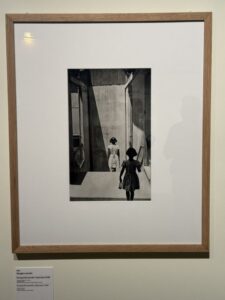
Sergio Larrain
My great discovery was the photographer Alain Keler. In his work, I sensed something very close to the photography I associate with Magnum – a strong instinct for the moment and an attentive eye for people. Keler has been a member of the MYOP agency since 2008, having previously worked with Sygma and Gamma. Over the decades, he has covered conflicts in Lebanon, Chechnya and Central America, while also devoting years to documenting minorities and Roma communities in Europe. In 1997, he received the W. Eugene Smith Award for his project on minorities in the former Communist bloc.
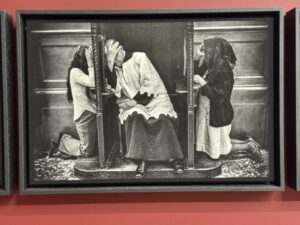
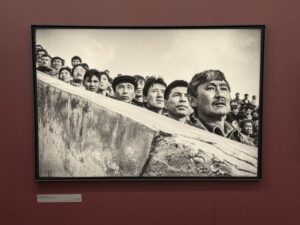
Allain keller
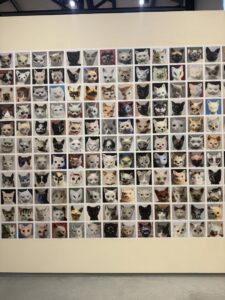
Perhaps the most ambitious project I saw in Arles was “Animal Model – 200 Years of Photography”, bringing together perspectives on animals by Richard Avedon, Martin Parr, Elliott Erwitt and many other photographers. Alongside the photographs were an entire wall of record covers featuring animals, another filled with cats’ faces and a third with portraits of monkeys. These inventive juxtapositions made me smile and linger, while the variety of images and ways of displaying them turned the visit into a succession of discoveries.
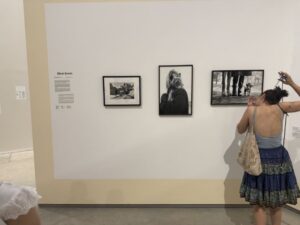
Elliott Erwitt
Curated by Nathalie Herschdorfer, the exhibition spans nearly two centuries of photography, organising this wealth of material around our different relationships with animals. Scientific observation sits alongside affection for pets, and admiration for wildlife alongside questions about its exploitation. Anonymous images appear beside works by renowned photographers, extending the exhibition’s scope beyond recognised photographic authorship. Beneath the humour and visual inventiveness, a more serious question gradually emerges: how do images of animals reflect our own habits, emotions and contradictions?
“Soul of the City” by Martine Barrat offered an entirely different experience – classic black-and-white photography, with prints that looked to me as though they had been made by hand in the darkroom. The photographs take us among the residents of Harlem and the South Bronx – neighbourhoods with which Barrat has developed a deep connection over the years. That closeness is evident in her gaze, full of respect for people, their everyday lives and their ability to live and love despite the harshness of their surroundings.
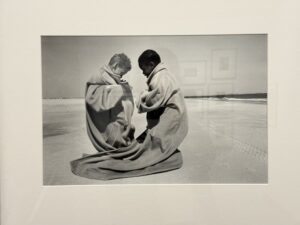
Martine Barrat
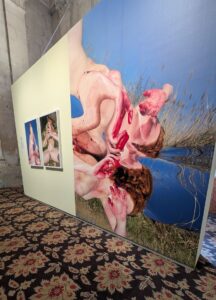
One of the most provocative exhibitions for me was “The Cannibal Image”, presented in the Chapelle de la Charité. Its themes of the body, sexuality and desire took on a particular tension within the church setting. Curator Alessandra Chiericato brings together eight artists around the idea of photography as an image that “devours” reality and returns it transformed. I was also drawn to works featuring a “photograph within a photograph” – layers and interventions that made me look again and search for the boundary between what had been photographed and what the artist had constructed. The provocation came both from the subject matter and from the way the images themselves were made.
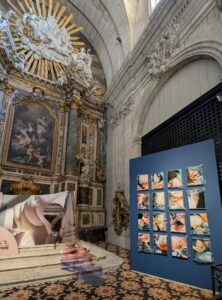
Running alongside Les Rencontres d’Arles is Festival OFF Arles – a programme of independent exhibitions that extends the photographic trail across the town. It features both established artists and emerging names, with free admission to the exhibitions. For 2026, the organisers announced around 200 exhibitions in more than 150 venues – plenty more reasons to stray from a planned route.
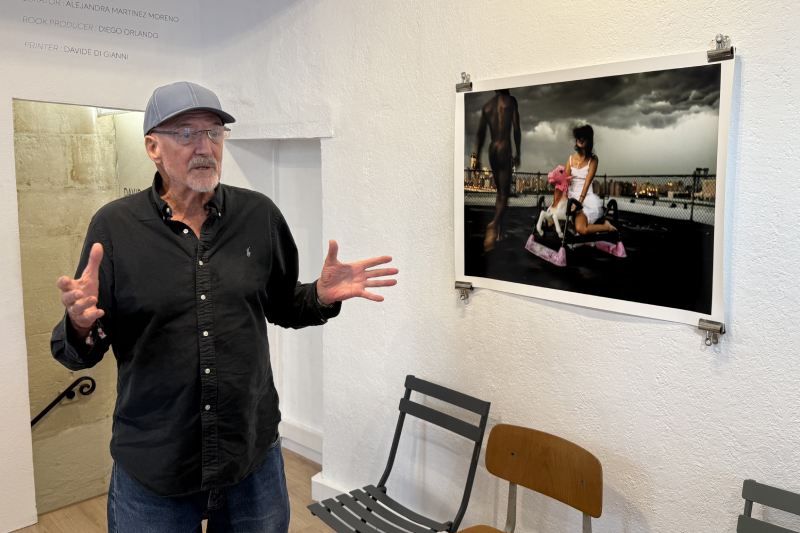
On one such detour, while looking for another exhibition, I noticed a poster outside a gallery bearing David Alan Harvey’s name. The door was open, so I went in, only to find the photographer himself arranging his prints. In the photograph accompanying this text, he is telling me the story behind one of his well-known images. He recalled being told that even Magnum photographers should occasionally make staged photographs. The model and the man in the picture had been with him that day, while the toy horse was already on the rooftop when they arrived. A detail found on location had become part of the composition.
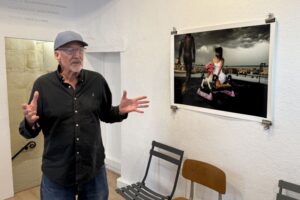
David Alan Harvey
Another exhibition in the OFF Arles programme that impressed me was “Las Calles: In the Spirit of Youth” by Alex Webb. Presented at Galerie Arena, it combines his earlier photographs from Mexico with new images exploring youth and street life. Webb has been photographing in the country for more than five decades, and saturated colours, deep shadows and bright light are part of his unmistakable photographic language. In his layered compositions, several scenes seem to unfold at once, and the eye keeps discovering new connections between them.
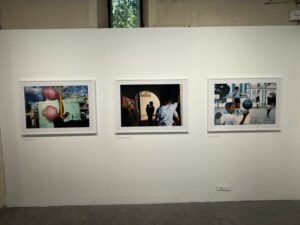
Alex Webb
When I think of Arles now, I remember both the photographs and the paths that led me to them – wandering through the town, the supermarket storeroom, the open gallery door and a conversation with someone whose pictures I had known for years. This is what makes the festival feel so alive: something unexpected can always happen between two exhibitions you have planned to visit. For me, the most valuable part of the trip was discovering photographers I had never heard of and seeing those I thought I knew with fresh eyes. I left wanting to return – and curious to see where the map would take me next time.
Author: Ivaylo Bozhinov